




Can you Pump an eFoil?
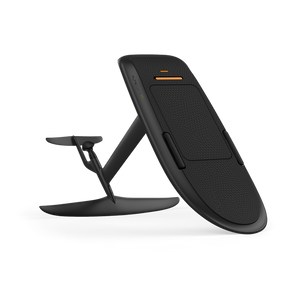
Pumping - the foundation of foiling - requires a delicate balance of timing, body position, and board control. This essential technique - vital across all foiling disciplines - has become increasingly possible for today's eFoils thanks to their compact and responsive designs. Yes, you can certainly pump your eFoil, and mastering this rhythmic conversation between rider and board will elevate your riding experience to new heights.

Understanding the Pump
How does pumping work and what is the path to mastery?
- Timing is Everything: Natural foil movements create distinct patterns through water, with each foil setup having its own rhythm and cadence. Tune in and sync your pump with the foil’s flow. With practice, anyone can master this harmony.
- Equipment Choice Matters: The physics of wing design enables this motion, with equipment configuration playing a crucial role. High-aspect wings offer minimal resistance with maximum glide. Wing surface area, mast stiffness, fuselage length, and system weight also crucially determine the pumping characteristics. Tune the system to your weight, ability and riding preferences. Begin with larger, slower wings before progressing to smaller, faster ones - community advice will be invaluable here.
- Power Integration: Skillfully integrating throttle control with pump movements can create a powerful synergy that enhances your experience. This approach accelerates learning while unlocking new opportunities to blend powered and momentum-driven flight into a brand new riding style.

Techniques for Effective Pumping
Finding your board’s sweet spot - the optimal stance position for your mast and wing configuration - is the first step to understanding how to pump. Begin your practice at stable speeds, and start working those legs! Focus on controlled, consistent movements that flow with the forces around you. Experiment with weight shifts and shuffles, varying pump cadence, following your instincts until you feel things start to click.
Your initial goal should be to develop the three fundamental pump types: acceleration pumps for building speed, height-generating pumps for maintaining elevation, and maintenance pumps for efficient cruising.
Your stamina and skill will develop naturally with practice, and you’ll learn to transition between the pump types seamlessly. Eventually, you’ll work on blending motor power with your pump rhythm to conserve energy and maintain the optimal speed range for your foil.
Feel disconnected? Pause your pumping occasionally - glide and connect with your foil’s natural movement to tune back in.

Conditions Best Suited for Pumping
Begin in flat water conditions where you can focus entirely on movement fundamentals without external variables throwing you off. Remember to take advantage of tailwinds, which naturally enhance glide and make pumping more intuitive.
Small wind bumps and swells will also become valuable training tools, allowing you to practice timing your pumps with water movement and learn to extract energy from the surface conditions. This makes downwind runs particularly beneficial for skill development.
Master the fundamentals first, then move onto headwind practice where precise technique becomes essential.

Advanced Techniques
As your skills progress, focus on incorporating pumps into carving turns, paying special attention to timing your pump cycles with turn initiation while maintaining consistent foil height. This will allow you to exit turns with increased speed and better control. Try varying your mast depth to optimize system drag.
It’s also rewarding to experiment with combinations of powered and unpowered riding techniques. Test yourself often on how far you can pump unassisted - developing independence from the motor is essential. Continuously refine your equipment and practice mastering the pump technique for both submerged and elevated motor positions. Developing a deeper understanding of foil dynamics and gear selection will help improve your pumping efficiency across all maneuvers and conditions.
Benefits and Applications
The advantages of mastering pump techniques extend far beyond basic riding skills. You'll experience significantly extended battery life and range while gaining the ability to use lighter, more responsive setups. Your speed control will improve across all conditions, and you'll be able to utilise wind and swell in your natural riding style. The techniques you learn will also transfer effectively to other foiling disciplines, reducing your dependence on motor power while improving your overall foiling abilities.

Future Developments
The eFoil industry is evolving rapidly, with manufacturers creating specialized systems that balance electric power with performance and pumping efficiency. Enhancements focus on integrating power boosts while enhancing surf characteristics and reducing weight. Parallel advances in battery and motor technology offer increasingly compact yet capable setups, unlocking new possibilities for augmented pumping, and new crossover riding styles and disciplines.
Key Tips for eFoil Pumping
- Master the Basics: Timing, body position, and board control are key for converting up-and-down motion into speed.
- Develop your Flow: Focus on fluid, controlled movements instead of forceful actions.
- Choose the right Gear: Wing design, mast rigidity, and weight impact pumping efficiency. Select gear accordingly.
- Utilise your Power: Blend throttle control with pumping for efficient, powered riding.
- Practice the Three Pumps: Acceleration, Height-Generating, Maintenance.
- Select ideal Conditions: Practice in flat water, use tailwinds, and focus on downwind runs.
- Refine your Technique: Include pumps in turns, experiment with powered/unpowered riding.
- Reap the Rewards: Boost battery life, improve speed control, and transfer skills to other foiling disciplines.
The journey to mastering eFoil pumping requires dedication and patience, but the rewards are well worth the effort. By focusing on these key ideas, from dialling the basics to choosing the right equipment and conditions, you’ll build a strong foundation before charging into more complex territory. Remember that every skilled rider started as a beginner - consistent practice and gradual progression are your keys to success.