




What happens when you fall off an eFoil?
Introduction to safety while eFoiling
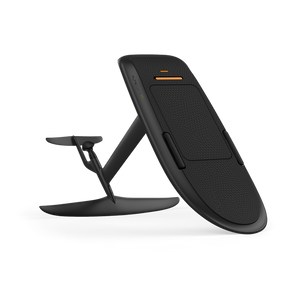
Like any watersport, there is a risk of injury with eFoiling. The mast, wings and propeller are sharp, so be sure not to kick them when getting onto your board. Then, fall away from them when you lose your balance while riding. We will discuss this more below.
We always recommend keeping well clear of other water users at all times. Check regulations for vessel operating distance rules in your area. Always be on the lookout for swimmers, divers and other vessels or obstacles when riding; they may be obscured by waves or glare. Only riding as far as you can swim back and avoiding any surf breaks are two other important safety measures.

Typical fall scenarios and what to expect
Falling is part of eFoiling. Everyone experiences it, even advanced riders. The key is to learn how to do it safely. Thankfully with Fliteboards, there are a few safety features that are built into the technology.

The first is called Automatic Tilt Detection. Every board has an Inertial Measurement Unit, which can detect the angle of the board. If the board goes beyond a certain angle, the motor cuts off. So, in a crash the motor will typically cut out before you hit the water even if you’re still holding your finger on the trigger. Tilt detection cutoff is a really important safety feature.
As mentioned above, you may still have your finger on the trigger when you’re starting to go down. No need to worry if you haven’t gotten used to letting go as soon as you start to fall (but do try!), because Flite Controller’s trigger position is measured with extreme accuracy and reliability, like the accelerator pedal in a car. The bluetooth signal between the Fliteboard and Flite Controller is continuously monitored. Your Fliteboard detects when the Flite Controller is submerged and immediately shuts down the motor to avoid injury. Thus you have two layers of safety protection during falls.

Safety gear for safe falls
Regulations vary depending on your country and state. That means in some places, a helmet and PFD are not required. However, we always recommend using them. When you hit the water at speed, a helmet is important for protecting your head from the impact. It is even more important in the case of accidentally coming in contact with your board, mast or wings. Your PFD will also help distribute the force of a fall and keep you safe in the case of a more serious accident, where you need to be rescued or swim back to shore.
When it comes to your propulsion system, you can make safer choices. In the case of using Flite Prop, ensure you always have the Prop Guard fitted. The safest propulsion option is Flite Jet 2, which has a fully encased impeller, rather than an exposed propeller. This not only offers riders safety, but also a smooth and responsive ride. It’s the propulsion we recommend to all but the most advanced wave riders.

While not a physical piece of gear, you can use Flite App to draw Fly Zones. Basically, this safety feature allows you to avoid shallow water, such that when you approach one of these areas, your Flitescooter will automatically begin to slow down. You can also limit your speed in the app, which might be helpful during the learning phase.

Tips to minimise falls
It may seem obvious, but the more you foil, the more you’ll understand this: ride at your skill level. This means to take the learning curve slowly, not trying to push beyond your abilities. Often, the worst wipeouts come from trying a move you are not ready for, whether this means a sharper turn or a faster speed. Practise / Practice each step until you’re confident to move to the next. If you’re a beginner, you may like to read this article with a step-by-step guide of learning to eFoil.

The best way to avoid injury is to practise the correct falling technique. As soon as you begin to lose balance, purposely fall in the direction the board is already tipping. You will then likely end up in the water on the opposite side to the hydrofoil assembly. Like being on stilts, it is impossible to regain balance once your weight is no longer above the hydrofoil wings (unless you are turning), so once you feel yourself going, commit to the fall.

Another option is to jump off the back of the board if you know you have lost your balance. Whether falling off the side or jumping off the back, always try to release the trigger immediately.

When you are falling, you may start to tense your body because the outcome feels unknown. However, it’s best to relax as best you can. While this may be counterintuitive, try your best and remember, practise makes perfect.

You can read this article for more safety tips.