





Which eFoil wing is right for me?
Estimated reading time: 8 minutes
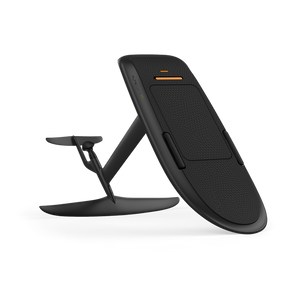
Fliteboard wings are designed specifically for electric hydrofoiling. Expert hydrodynamicists created our range of strong and interchangeable wings. There is always something new to discover by changing your wings. It’s one of the easiest ways to transform your ride.
Our latest wings have a C in the name (with the exception of the Flux range), which denotes that they’re part of the conical wing range. They boast an effortlessly streamlined design for increased all-round performance. With an ultra-narrow hydrodynamic path, they cut through the water with ease. They can be used with any eFoils with a C in the name (Series 5/6 plus Series 4 MN and Performance eFoils). All other wings are from our classic range, and have a standard, flat interface. They are only compatible with Series 4 (excluding MN and Performance eFoils) and earlier.
There are wings and stabilisers for every riding style. We’ll walk you through an overview of each range below. You can learn more details about each wing here and if you’re still unsure, contact our global support team for advice.

Cruiser Wings:
- Stable, early takeoff, most popular
- For beginners to advanced riders
- Wing: Cruiser 1100, Cruiser 1800 / C
Cruiser wings have been designed for maximum stability. Wing tips turn down for safety and stability, so beginners should start off with this range. If you’re a beginner and a heavier rider then the Cruiser 1800 will be best to start with. It’s the wing most used at Fliteschools around the world.
Cruiser Jet Wings
- Stable, early takeoff, relaxed
- For beginners to advanced riders
- Wing: Cruiser Jet 1500 / C, Cruiser Jet 1800
With excellent takeoff, lift and stability, the Cruiser Jet range is perfect for those looking for a relaxed and forgiving ride. Their larger size and slight anhedral design also make them suitable for riders wanting to cruise at lower speeds but with more manoeuvrability than the standard Cruiser range. Advanced riders can use the extra glide for riding swell.
Flyer Wing:
- High speed, responsive turns
- For intermediate to advanced riders
- Wing: Flyer 800
For more stability at speed, the Flyer wing is a higher aspect option. It's 800 cm2 which allows you to ride faster. The high anhedral design reduces roll rate for a more stable ride. Use a lower number shim for riding faster (more on that later). This wing is only available in our classic, flat interface range.
Removing the Prop Guard is the number one thing that's going to increase the board’s responsiveness. That's the next step after you progress to the Flyer wing. Only remove the Prop Guard if beginners won’t be using your board. You need to be confident in releasing the trigger and falling away from the board at this stage.
Flow Wings:
- Loose, most manoeuvrable, wave riding
- For intermediate to advanced riders
- Wings: Flow 900 / C, Flow 1100 / C, Flow 1300, Flow 1100, Flow 900
It’s a big step change to Flow wings. If you've used a Flyer wing, you will know there's a big difference between the Flyer wing and the Cruiser wing. When you go to a Flow wing, that difference is three times greater. Flow wings really are that responsive.
We recommend starting off with a bigger Flow wing, like the 1300. If you are more confident or a lighter rider, then perhaps the Flow 1100. With higher aspect ratios than the Cruiser ranges and a dihedral design, they are more efficient and incredibly manoeuvrable. High aspect tips and a tailored lift distribution also result in incredible ventilation resistance during wingtip breaches.
If you’re riding flat water, choose a smaller Flow wing for faster riding. If you want to ride waves, use the Flow 1300 or Flow 1100 for bigger waves. These wings have been designed to lift and ride slowly but with maximum roll rate, so you can use the wave energy but still have a very responsive ride.
Flow S Wings:
- Loose, responsive, extreme roll rate
- For intermediate to advanced riders
- Wings: Flow S 900, Flow S 1100 / C, Flow S 1300 / C
Flow S wings are the lower aspect of the Flow range, for an even looser ride at the expense of glide. Their large tips are not as ideal as the Flow range for wing breaches and their aspect ratio is not as well suited to unpowered riding. Flow S wings are best for turning and carving. The most responsive wing is the Flow S 900. It’s like riding a skateboard with loose trucks.
Race Wing:
- High speed, responsive turns
- For advanced riders
- Wing: Race 700
If you’re familiar with the Flyer wing, you’ll feel the similarity on a Race wing. However, it’s a scaled-down, higher-performance version. It's got less of the anhedral shape, so you have to be careful with the pointier tips. It's higher aspect and will take you over 50 km/h if you want to push speed in a straight line. It needs more force to make it turn than the Flow wings, but that gives you good feedback. It's like snowboarding with hard boots. This wing is only available in our classic, flat interface range.
Wave range:
- Advanced waves
- For advanced riders
- Wings: Wave 850 C, Wave 1000 C
This is a specialised/specialized wing range with enhanced glide and agility, designed for powering off the throttle and harnessing the power of the swell. Wave 1000 C is made for agile wave riding and smooth turns. The smaller size of Wave 850 C means you can go faster, carve harder, and catch even bigger waves unpowered. These wings are being replaced by the FLITELab* designed Flux range, so when they’re gone from the site, you won’t see them again.
MN range:
- Limited edition design
- For beginners to advanced riders
- Wing: MN 1300 C
Designed with input from world-famous designer Marc Newson, this conical wing blends the friendliness of the Cruiser Jet wing with increased performance. The versatile and high-performance MN 1300 C suits intermediate and advanced riders, as well as lighter weight beginners.
Flux range:
- Designed by FLITELab*
- For beginners to advanced riders
- Wings: Flux_707, Flux_808, Flux_1010
A user-friendly and versatile range from the foiling experts at FLITELab*. These mid aspect ratio conical wings boast an intuitive rail-to-rail surfy feel. With an exceptionally low stall speed yet fast on demand, they handle tip breaches without ventilating. The higher the number, the more lift but also more drag.
Flux_707 is the ultimate wave riding weapon, from everyday to pumping waves. It’s also fun for flat water carving and excellent for high-speed performance, making it our RACE wing of choice. It just might become your daily driver. Flux_808 is a versatile option for medium to small waves, and a go-to wing for many intermediate to advanced wave riders, including Adam Bennetts. This balanced wing also delivers smooth, efficient performance with stable, confident high-speed control. Flux_1010 is a high-lift wing suitable for lighter beginners or heavier intermediate riders. It excels in small waves for smooth riding, and carves well, especially given its size and lift.

Stabilisers and Shims
Fine tune your performance
Finally, we get to stabilisers and shims. The stabiliser is the smaller wing to the rear of the propulsion system. Every stabiliser has been designed to pair with specific wings. This fine tunes your riding experience. Choose from Flite 290, Flite 500, Cruiser Jet 300, Flow 245, Race 200, Flux 160 / 140 / 125.
Fliteboard is the only eFoil range in the world that allows the rear stabiliser to be adjusted. Changing the angle of the stabiliser makes a big change in terms of the way the board feels. This can be accomplished through the use of shims. Every board comes with four shims (in the past it was six but through extensive testing we found that the zero to three range was best).
With a higher number, you get more front foot pressure and more turning response on the wing. As you go lower, you get less front foot pressure (particularly as you go faster) because the stabiliser has a lower angle of attack and creates less stabilisation / down force. As you create more forward momentum, that angle creates a lot of down force that you've got to compensate with your body weight by standing further forward on the board and putting more force through your front leg.
If you're an advanced rider who wants to ride fast, and you don't want to have that front foot pressure, use a 0 shim or a 1 shim. If you’re a beginner or want to ride a little bit slower, use a 1 or 2 shim. A 1 or 2 shim will also be suitable for those who want pitch stability and more response.
Configure your Setup
The fun part
We hope this has been a helpful overview of our eFoil wings, stabilisers and shims. If you’re buying a complete setup, you can read this article or our user-friendly Configurator will guide you with ease. If you already have a Fliteboard and want to add a new wing set, visit our Shop. Still have questions? Contact our global support team.